Prodigys Technology has been selected for Area Science Park's HPC4SME initiative with the project “Rehab3D – AI movement analysis and 3D reconstruction for rehabilitation monitoring”.
The project aims to develop and validate an advanced Computer Vision and Artificial Intelligence module for monitoring rehabilitation exercises, using the computing capabilities of Area Science Park's ORFEO HPC infrastructure.
Rehab3D aims to make movement analysis more accurate through pose estimation and three-dimensional reconstruction of the human body, using images and videos that can also be captured with everyday devices such as smartphones, tablets and PCs.
The goal is to analyse exercises without requiring patients to use dedicated sensors or equipment, providing useful information on movement accuracy, execution speed and positioning. As the project advances towards 3D models, it will also be able to assess more complex postural variations.
From 2D recognition to 3D reconstruction
The project builds on research and development already started by Prodigys, including through collaborations with the University of Trieste.
Available technologies can already identify a person's pose and the exercise being performed from a video. Rehab3D aims to take this a step further by addressing some of the limitations of general-purpose 2D and 3D analysis models.
The project will test different AI models for pose estimation and three-dimensional reconstruction of a person, also assessing the use of images captured from multiple angles. The results may be combined with information about the exercises and specialist assessments to provide a more complete picture of how a rehabilitation programme is progressing.
The role of the ORFEO HPC infrastructure
A central part of the project is the use of High Performance Computing resources for tasks that require substantial computing capacity.
Processing large volumes of video, training and fine-tuning AI models, and comparing different configurations all require significant GPU resources.
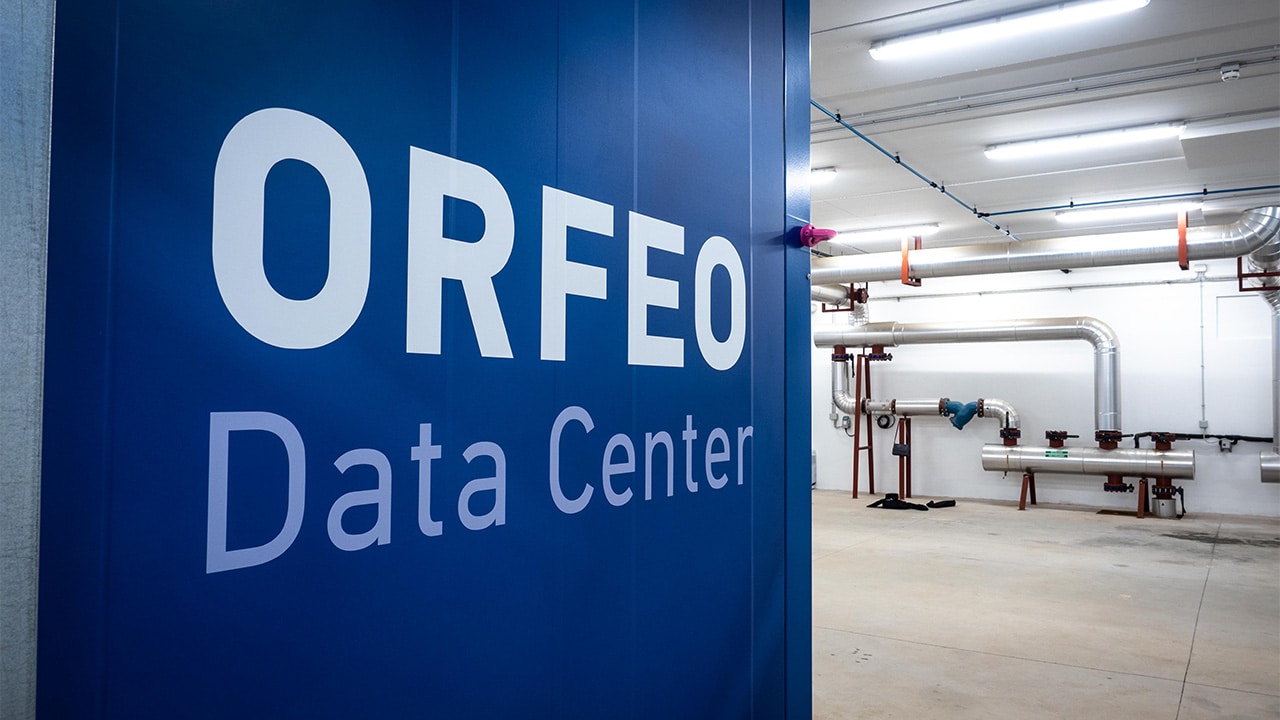
Through HPC4SME, Prodigys will be able to use Area Science Park's ORFEO infrastructure for training, benchmarking and experimentation, with greater computing capacity than is normally available within the company.
Access to ORFEO services therefore means more than additional resources: it provides a way to accelerate experimentation, compare different models and configurations, and assess how well the solutions can scale.
AI for an increasingly digital rehabilitation journey
The expected outcome is the technical validation of a more accurate and scalable module for monitoring rehabilitation exercises, which can also support activities carried out independently outside a rehabilitation centre.
The technology may become part of digital services initially intended for rehabilitation, with possible future applications in other fields where movement analysis is central.
The project will run for eight months, from 1 October 2026 to 31 May 2027. Area Science Park's decision sets the total project value at €47,000, including digital innovation services and activities directly funded by Prodigys.
Rehab3D's selection for HPC4SME is part of Prodigys' research and development work in Artificial Intelligence, Computer Vision and advanced computing infrastructure, with the aim of turning experimentation into solutions that can be used in real-world settings.